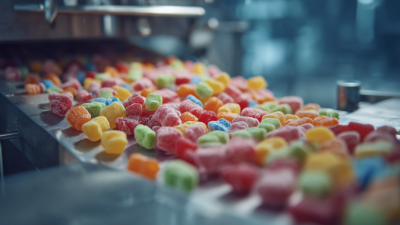
Picking the right candy production line isn’t just about comparing machine prices—it's a practical decision that requires some serious thought. You need a line that fits your recipe, your target output, the shape of your candies, how you want them packaged, and the size of your available space. For example, making soft gummies calls for different equipment—think cooking, depositing, cooling, and handling—compared to making hard candies. Even tiny variations in syrup temperature can change the candy’s texture, shine, and how long it stays good on the shelf.
Dr. Richard W. Hartel, a well-respected scientist and author in the field of confections, once said, “Confectionery is both science and art.” And honestly, that’s a pretty good way to look at it when you're evaluating suppliers like Baker Perkins, Tanis Food Tec, or Candy Machines. Sure, their machines might look similar in photos, but what really matters is how they perform—things like control precision, how easy they are to keep clean, how well your operators are trained, and the kind of support you get after buying. It’s definitely worth asking for some production trials using your actual recipe. See how the line handles sticky batches, color shifts, cleaning, and those unexpected little hiccups that pop up.
A solid candy production line should deliver steady heating, precise depositing, reliable cooling, and gentle handling of the products. Make sure the controls record important data like temperature, speed, and batch info. Also, take a close look at the stainless-steel surfaces—nooks, corners, valves, and narrow pipes can be tricky when it comes to cleaning.
Sure, chasing a lower price might be tempting, but it can sometimes mean you’re making compromises you’ll regret down the road. I've seen situations where specs sound impressive, but then maintenance access is a nightmare. Honestly, that’s something to seriously think about. The best line isn’t always the cheapest or the fastest—it’s the one your team can operate safely, keep spotless, and maintain for years to come. Before you sign any deal, make sure you’ve got clear documentation, parts availability, training info, and realistic capacity expectations. Trust me, it’s worth doing your homework beforehand.

Candy Production Lines: Purpose, Products, and Production Goals
How to Choose the Best Candy Production Line?
Candy production lines should match the product, factory space, and production goals. A hard candy line needs precise cooking, forming, cooling, and wrapping equipment. A gummy line requires controlled heating, depositing, setting, and demolding. Chocolate products need stable temperature control and careful handling.
Define the product before comparing machines. Check its size, shape, moisture level, texture, and packaging format. A small batch line may suit seasonal products and frequent recipe changes. A continuous line can improve output, but it demands steady ingredient supply and trained operators. Higher speed is not always better. Waste can rise quickly when cooling is uneven or depositing accuracy is poor.
Ask suppliers for measurable evidence. Request capacity tests using your recipe, not only standard samples. Review temperature records, cleaning access, food-contact materials, and spare-part support. Reliable lines should provide traceability and consistent process control. Operators also need clear training and safe access around hot surfaces. In practical assessments, a line may look efficient on paper yet create difficult cleaning points. That detail matters. I would leave room for adjustment, because early production trials often reveal unexpected texture or packaging problems.
Key Candy Production Processes and Equipment Options
How to Choose the Best Candy Production Line?
Candy production begins with controlled cooking. A steam-jacketed kettle or vacuum cooker removes moisture accurately. This affects texture, shelf life, and flavor strength. Hard candy may need a precise depositor for consistent shapes. Chewy products often require a batch roller, rope sizer, and rotary cutter. Jelly candies need starch molding or silicone depositing equipment. Each option changes labor, waste, and cleaning time. Cooling tunnels stabilize the product before wrapping. A flow wrapper protects individual pieces from humidity and handling. Check temperature control, dosing accuracy, stainless-steel construction, and access for sanitation.
Tips: Map your recipe before choosing machinery. Test a small production batch. Watch the candy move through every stage. Measure product weight, cooling time, and wrapping speed. Ask whether operators can clean hidden corners easily. A fast machine is not always the best machine. Sometimes, a simpler line performs more reliably.
Quality control should connect with the production process, not appear at the end. Use calibrated scales, temperature records, moisture checks, and regular visual inspections. Food-safe design and documented cleaning procedures support dependable operation. Experienced suppliers should provide process data, training, and realistic capacity figures. Do not trust impressive output claims without testing your actual recipe. A line can look efficient on paper but struggle with sticky syrup, uneven cooling, or delicate centers. That gap deserves careful review.
How to Match Line Capacity with Expected Production Demand
Selecting a candy production line starts with demand, not the machine’s advertised maximum output. Estimate daily demand from confirmed orders, seasonal peaks, and realistic sales forecasts. Then divide it by available production hours, not the total hours in a day. Include cleaning, flavor changes, maintenance, and short operator breaks. A line rated at 1,000 kilograms per hour may deliver only 700 to 850 in practice. That difference matters.
For example, a factory needing 5,000 kilograms daily across eight operating hours needs 625 kilograms per hour before losses. If expected waste and changeovers add 15 percent, target capacity rises to about 720 kilograms per hour. Do not size the line only for average demand. Check the busiest month. A small buffer can protect delivery schedules without creating excessive idle equipment. Oversizing, however, ties up capital and may leave candy exposed to longer holding times.
Match the line to product form, batch size, cooling time, and packaging speed. A fast cooker cannot solve a slow wrapper. The complete line is limited by its bottleneck. Review actual output from similar recipes or a controlled production trial before signing specifications. Ask suppliers to state output conditions, including product temperature, moisture, staffing, and acceptable waste. Forecasts are imperfect. Recheck capacity quarterly as orders, pack sizes, and labor availability change. This approach keeps expansion practical while exposing weak assumptions early.
Evaluating Ingredients, Recipes, and Product Quality Requirements
How to Choose the Best Candy Production Line?
A candy line should match the ingredients, not just the target output. Sugar, glucose syrup, milk powder, oils, acids, and natural colors behave differently during processing. A hard candy recipe may need precise boiling control and rapid cooling. A gummy recipe requires controlled mixing, depositing, and setting time. Ingredients with high moisture can also create sticking, uneven texture, or shorter shelf life.
Review each recipe with a process engineer and quality specialist. Check viscosity, cooking temperature, pH, moisture, and cooling requirements. Small differences matter. For example, an extra few degrees during cooking can make candy too dark or brittle.
The production line should support accurate dosing, gentle mixing, and repeatable temperature control. It should also allow thorough cleaning between recipes, especially when allergens are present.
Product quality requirements should guide every equipment decision. Define the expected weight, shape, color, texture, and tolerance range before selecting machinery. Ask for trial production using your real ingredients. Laboratory samples can look excellent, yet full-scale batches may reveal air bubbles or inconsistent filling. That is a useful warning, not a failure. Operators also need clear controls, traceability records, and practical maintenance access. A line that runs fast but cannot maintain stable quality will create expensive waste. Sometimes, a slightly slower system is the more reliable choice.
Comparing Automation, Flexibility, and Ease of Operation
How to Choose the Best Candy Production Line?
Comparing Automation, Flexibility, and Ease of Operation
Choosing a candy production line starts with the product, not the machine. Hard candy, gummies, and filled pieces require different heating, depositing, and cooling controls. A practical evaluation should examine output targets, batch sizes, floor space, and cleaning routines.
Automation can improve consistency and reduce repetitive labor. Automated temperature control helps protect texture during cooking. Servo-driven depositing can maintain accurate piece weights. However, advanced automation may increase training time and repair complexity. A line with clear alarms, accessible components, and documented procedures is often more reliable than a highly complicated system.
Flexibility matters when recipes or package sizes change. Quick-change molds, adjustable depositing heads, and recipe storage can reduce downtime. Ask an operator to change a product during a trial. Watch the process carefully. If tools are difficult to reach, production may slow despite impressive specifications. Ease of operation includes touchscreen logic, safe access, simple sanitation, and readable maintenance instructions. Operators should complete routine tasks without excessive supervision.
Do not judge performance from speed alone. Check weight variation, cooling uniformity, cleaning time, and rejected pieces. A short factory test can reveal problems that brochures hide. I have seen teams prioritize maximum capacity, then struggle with frequent changeovers. That choice may be understandable, but it deserves review. The best line usually balances automation with human control, leaving operators enough visibility to correct small issues before they become costly waste.
How to Choose the Best Candy Production Line: Automation, Flexibility, and Ease of Operation
| Production Line Type |
Typical Capacity |
Automation Level |
Product Flexibility |
Changeover Time |
Ease of Operation |
Typical Labor Requirement |
Best Suited For |
| Manual or Semi-Automatic Line |
50–300 kg/h |
Low–Medium |
High |
15–45 minutes |
Good |
6–12 operators per shift |
Small businesses, seasonal products, and frequent trial batches |
| Batch Cooking and Forming Line |
200–800 kg/h |
Medium |
High |
20–60 minutes |
Good |
4–8 operators per shift |
Hard candy, toffee, fondant, and varied product portfolios |
| Continuous Depositing Line |
300–1,500 kg/h |
High |
Medium–High |
30–90 minutes |
Good |
3–6 operators per shift |
Gummies, jellies, filled candies, and consistent medium-to-large production |
| High-Speed Moulding Line |
800–3,000 kg/h |
Very High |
Medium |
60–120 minutes |
Moderate |
2–5 operators per shift |
Large-volume production of standardized candy shapes and formats |
| Integrated Automated Line |
500–2,500 kg/h |
Very High |
Medium–High |
30–90 minutes |
Very Good |
2–4 operators per shift |
Manufacturers seeking reduced labor, traceability, and stable output |
| Multi-Product Modular Line |
150–1,000 kg/h |
High |
Very High |
15–45 minutes |
Good |
3–7 operators per shift |
Contract manufacturers and brands with multiple candy categories |
Assessing Hygiene, Safety, Energy Use, and Maintenance Needs
How to Choose the Best Candy Production Line?
Hygiene should shape the equipment choice, not follow it. WHO estimates that contaminated food causes 600 million illnesses annually. Choose food-grade stainless steel, smooth welds, sloped surfaces, and fewer product traps. Tool-free access helps operators clean cooling tunnels, depositing heads, and conveyors faster. Codex Alimentarius recommends hygienic design, hazard control, and documented cleaning procedures. I would also test allergen changeover time with real syrup residue. Laboratory promises can differ from factory floors.
Safety requires more than emergency buttons. Guarded drives, interlocked doors, heat protection, and clear operator controls reduce daily exposure. A line should record temperature, pressure, and critical process limits. HACCP records make troubleshooting more reliable. Still, human error remains possible. Training quality matters as much as sensor quality.
Energy and maintenance costs often hide inside the purchase price. The International Energy Agency reports that industry consumed about 37% of global final energy in 2022. Select efficient motors, insulated heating zones, variable-speed drives, and heat recovery where practical. The U.S. Department of Energy notes that compressed-air leaks can waste 20–30% of compressor output. Ask for measured energy data, not estimated figures. Maintenance access also matters: reachable bearings, common spare parts, lubrication points, and predictive sensors can reduce downtime. A perfect line is unlikely. Choose the design your team can inspect, clean, and repair consistently.
How to Choose the Best Candy Production Line?
Use this practical evaluation model to compare candy production lines. Hygiene and safety receive the highest weighting because they directly affect food compliance, worker protection, and product quality. Energy use and maintenance are also important for controlling operating costs and downtime.
The percentages represent a transparent procurement framework rather than data from any specific company or brand. Actual weighting should be adjusted according to product type, local regulations, production volume, and plant conditions.
FAQS
Define the candy’s size, shape, moisture level, texture, and package format. Hard candy needs cooking, forming, cooling, and wrapping. Gummy candy needs heating, depositing, setting, and demolding. Chocolate products require stable temperatures and gentle handling.
No. Higher speed can increase waste when cooling becomes uneven or depositing loses accuracy. A simpler line may perform more reliably. Speed needs control.
Controlled cooking equipment manages moisture, texture, and flavor strength. A precise depositor creates consistent shapes. Cooling equipment stabilizes pieces before wrapping.
Chewy products often use a batch roller, rope sizer, and rotary cutter. These machines shape the candy into even ropes and pieces. Sticky mixtures may still require adjustments.
Jelly candies can use starch molding or silicone depositing equipment. The choice affects labor, cleaning time, waste, and product detail. Small trials reveal practical differences.
Test the actual recipe, not only standard samples. Measure product weight, cooling time, moisture, and wrapping speed. Watch every stage closely. Small trials matter.
Use calibrated scales, temperature records, moisture checks, and regular visual inspections. Cleaning procedures should be documented. Food-contact surfaces must allow practical sanitation.
Operators need clear training and safe access around hot surfaces. Check hidden corners, cleaning access, spare parts, and process records. A line may look efficient on paper but create difficult cleaning points.
A small-batch line suits seasonal products and frequent recipe changes. A continuous line can increase output but requires steady ingredients and trained operators. I would leave room for adjustment.
Conclusion
Choosing the right Candy Production Line begins with clearly defining the products, recipes, and production goals. Consider whether the line will produce hard candy, soft candy, gummies, toffee, or other varieties, as each product may require different cooking, forming, cooling, depositing, coating, and packaging equipment. Capacity should also match expected demand, allowing enough output for current orders while providing reasonable room for future growth. Ingredient characteristics, recipe accuracy, texture, appearance, and quality standards are equally important when evaluating production capabilities.
Automation level, operating flexibility, and ease of adjustment can strongly affect labor efficiency and product consistency. A practical Candy Production Line should be simple to monitor, quick to change between recipes, and suitable for the available workforce. In addition, hygiene, operator safety, energy consumption, cleaning procedures, and maintenance requirements should be carefully assessed. Choosing equipment with accessible components, reliable controls, efficient utilities, and strong sanitation features can help reduce downtime, protect product quality, and support stable long-term production.